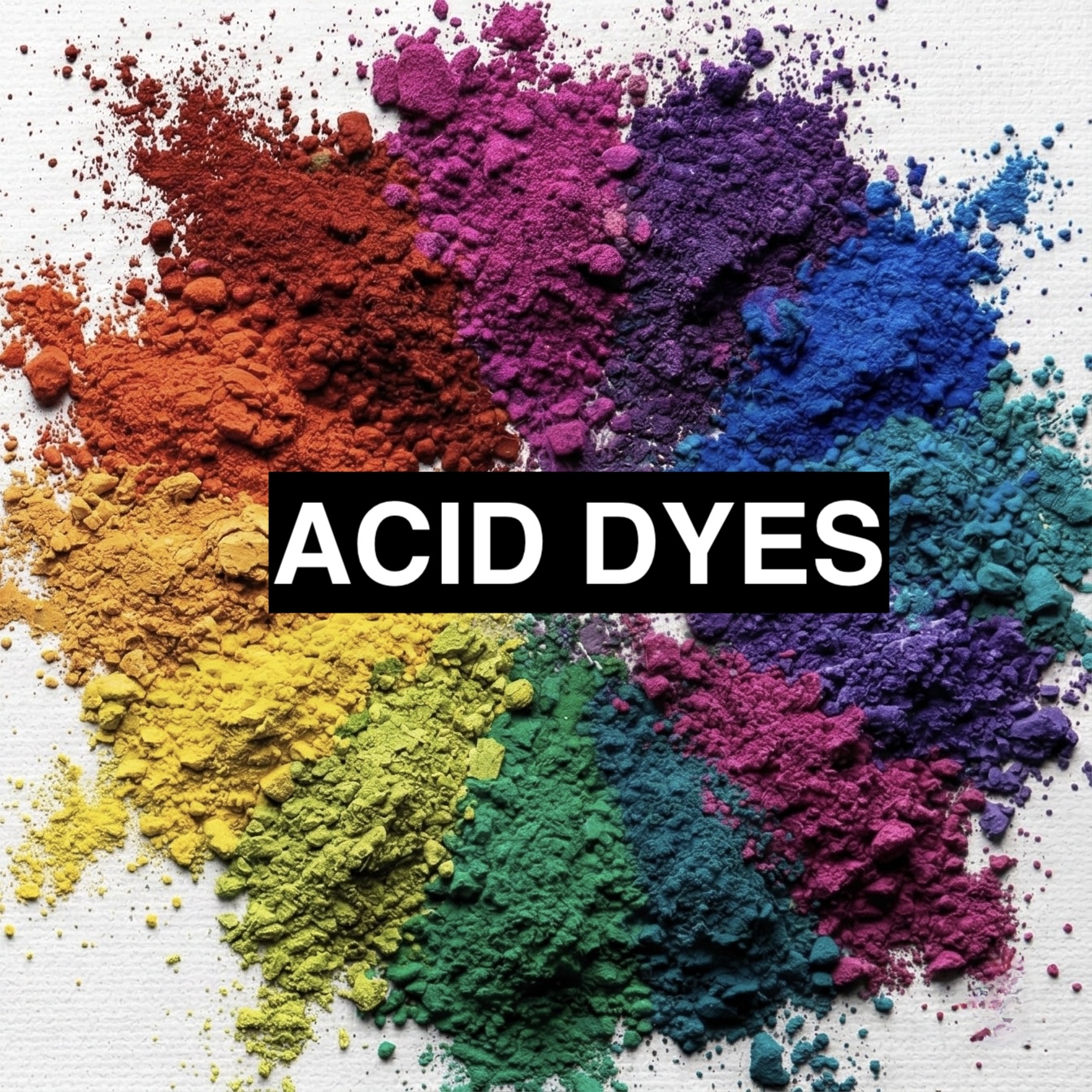
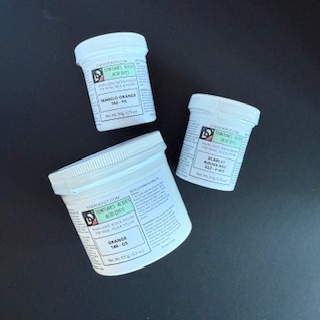
Acid Dyes















The Dyer Depot acid dye range is formulated for use on protein fibers such as wool and silk, as well as nylon. These dyes are easy to work with and produce clear, bright colours when used correctly. They are suitable for many hands-on dyeing approaches, from traditional pot immersion to low-water and surface techniques.
Depending on the method used—such as microwaving, baking, steaming, printing, spraying, or painting—you may see different effects, including colour shifts, layering, or separation within mixed shades. Results vary with technique, heat, and fiber, making this dye system well suited for both controlled projects and creative experimentation.
Acid dyes are powdered, highly concentrated dyes used for colouring protein fibers such as wool and silk, as well as nylon. They are commonly used for pot or tub dyeing yarn skeins, fabrics, feathers, and similar materials. These dyes can also be painted or printed onto fiber when the colour is set with steam.
For immersion dyeing, acid dyes require very hot water or steaming to bond properly with the fiber. Heat can be applied on a stovetop or in a washing machine. A mild acid—such as white vinegar or odorless citric acid—is needed to fix the colour. Acid dyes strike quickly, exhaust efficiently, and most shades offer good resistance to fading and washing. As with any powdered dye, basic safety practices should be followed.
Our colour charts are based on wool dyed in a pot on a stovetop. Results may differ on silk or other fibers, and variations in water, technique, and screens can affect colour appearance. When accuracy matters, sampling is strongly recommended. Finished pieces should be washed in cold water.
Please refer to the Instructions tab for step-by-step guidance, helpful tips, reference charts, and a troubleshooting article. When deep saturated colour is needed, all dye colours marked with an asterisk (*) should be used at 4% on weight of goods (OWG), rather than the typical 1.5–2% OWG used for most other colours.
Acid Dyes – General Information
Dyer Depot Acid Dyes are concentrated powdered dyes designed for protein fibers such as wool, silk, alpaca, mohair, angora, and cashmere, and they also dye nylon. These dyes are widely used for yarn, roving, fleece, fabric, and garments, and work well for both immersion dyeing and direct application techniques such as painting, steaming, or low-immersion dyeing.
Acid dyes require heat and an acidic environment to bond properly with the fiber. The acid is usually provided with citric acid or white vinegar, while heat allows the dye molecules to attach permanently to the fiber. When used correctly, acid dyes produce rich, vibrant colour with excellent wash durability.
Because these dyes are highly concentrated, small amounts produce strong colour. Final results depend on several factors including temperature, dye concentration, acidity of the dyebath, fiber type, and dyeing time. Different fibers and yarn constructions may absorb colour slightly differently, so testing samples is always recommended.
Dyeing Methods
Acid dyes are most commonly used for immersion dyeing in a dyepot where the fiber can move freely and heat can be carefully controlled. This method works well for solid colours, tonal shades, and kettle dyeing.
They may also be used for direct application techniques such as hand painting, low-immersion dyeing, or steaming. These methods allow for more artistic effects including variegation, colour movement, and layered colour effects.
Preparing Fiber
For best results, fibers should be clean and fully wetted before dyeing. Residues such as oils, dirt, or finishing agents can interfere with dye uptake and cause uneven colour. Allowing enough water and space for the fiber to move freely in the dyebath also helps produce more even results.
Dissolving the Dye
Acid dyes should always be fully dissolved in very hot water before being added to the dyebath. Mixing the powder first into a small amount of hot water to form a smooth solution helps prevent undissolved particles that can cause small colour spots on the fiber.
Rinsing & Care
After dyeing, fibers should be rinsed and washed gently in cool to warm water to remove excess dye. Very hot water during washing can weaken the dye bond and cause bleeding. Wool and silk dyed with acid dyes should always be washed in cooler water.
Safe Handling
As with all dye powders, handle with care. Use gloves, good ventilation, and proper studio practices, and keep dyes out of reach of children and pets.